

Why Practical Makeup Training Builds Better Professionals
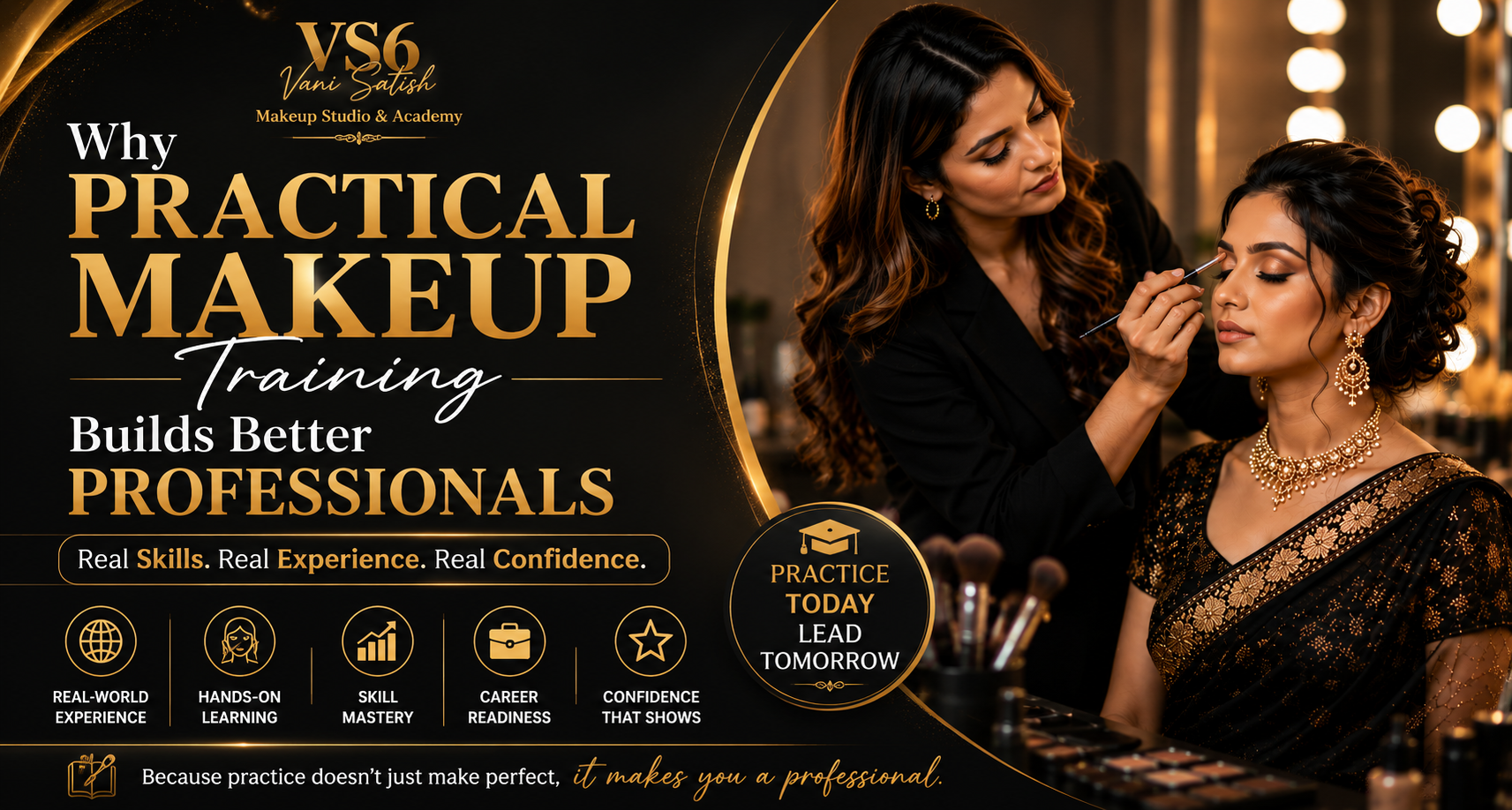
When pursuing a career in professional beauty, many aspiring artists assume that learning makeup is like studying any other academic discipline: read the textbooks, learn the theory, memorize product ingredients, and pass a written exam.
However, in the real world of high-stakes bridal bookings, fashion lookbooks, film sets, and 4K camera optics, theory alone will not get you booked.
While understanding skin biology, color theory, and product formulation is essential, beauty artistry is ultimately a physical, tactile craft. Here is an in-depth look at why 100% practical training on live models is the single most important factor in transforming an enthusiastic beginner into a high-earning, confident professional.
Direct Answer: Why Does Practical Experience Override Theory in Beauty Education?
Quick Summary:
Theoretical knowledge teaches you what products do, but practical training teaches you how real human skin reacts under pressure. Practical application develops tactile muscle memory, real-time color correction skills, adaptability across diverse skin conditions, and the speed required to execute flawless transformations within strict event schedules.
1. Real Human Skin vs. Synthetic Practice Surfaces
The most significant flaw in traditional beauty education is relying on plastic mannequin heads or digital face charts. Plastic surfaces are uniform, non-porous, perfectly smooth, and completely static. Real human skin, by contrast, is a dynamic biological surface.
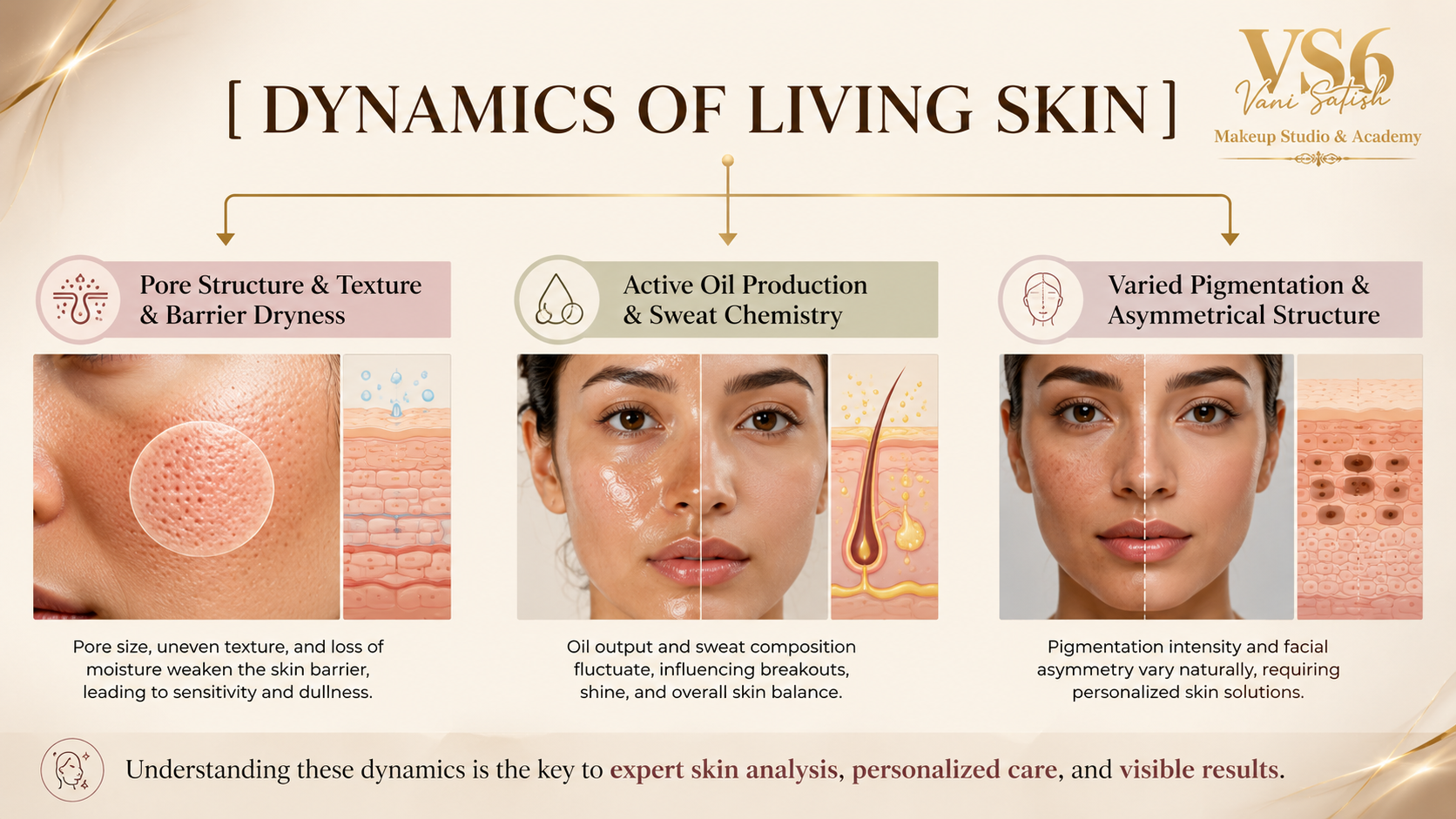
What Only Live Model Training Teaches You:
Texture Navigation: Learning how cream foundations settle into fine lines, large pores, or active acne breakouts—and knowing how to prep the skin barrier to minimize texture.
Skin Chemistry & Oxidation: Understanding how natural sebum, sweat, and body heat interact with silicones, oils, and pigments over several hours in warm climates.
Complexion Matching: Real human faces carry multiple undertones simultaneously (e.g., warm cheeks with cool undertones around the jawline). Real-time mixing and blending on live skin builds an intuitive eye for color correction that books cannot teach.
2. Developing Muscle Memory, Hand Pressure, and Tool Control
Applying makeup to yourself in front of a bathroom mirror uses entirely different angles, wrist postures, and hand pressure than working on someone sitting in your chair.
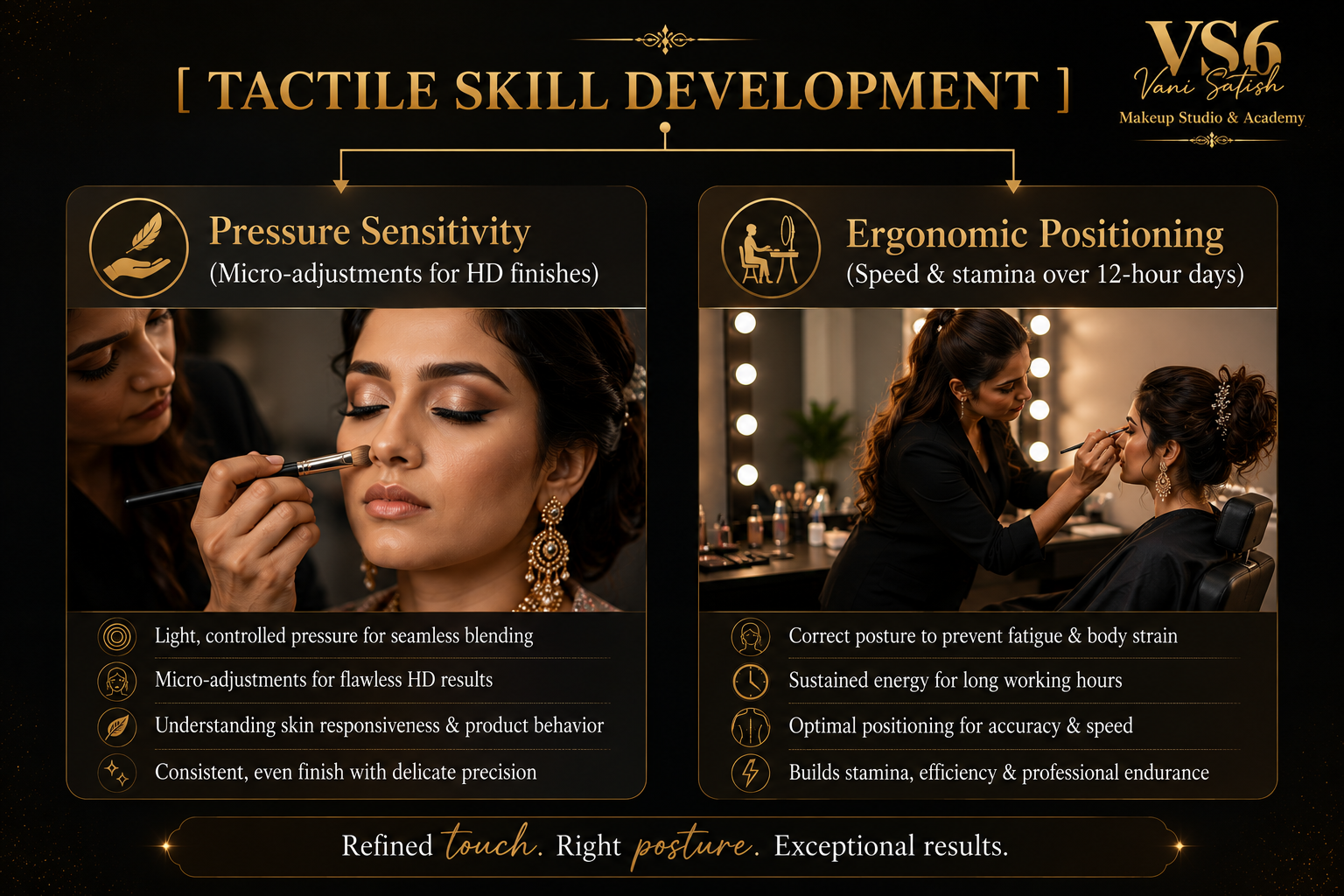
Pressure Control: High-Definition (HD) and Airbrush techniques rely heavily on micro-adjustments in hand pressure. Too much pressure creates streakiness and lifts previous layers; too little pressure leaves uneven coverage.
Tool Ergonomics: Learning how to angle brushes, hold airbrush guns, and maneuver hot hair-styling tools safely around a client’s eyes and ears requires repeated physical practice under instructor supervision.
3. Mastering Integrated Transformations: Hair Architecture & Saree Draping
In major wedding and event hubs across India—especially in cities like Bangalore—clients rarely hire an artist who only applies facial cosmetics. Luxury clients expect an integrated transformation package.
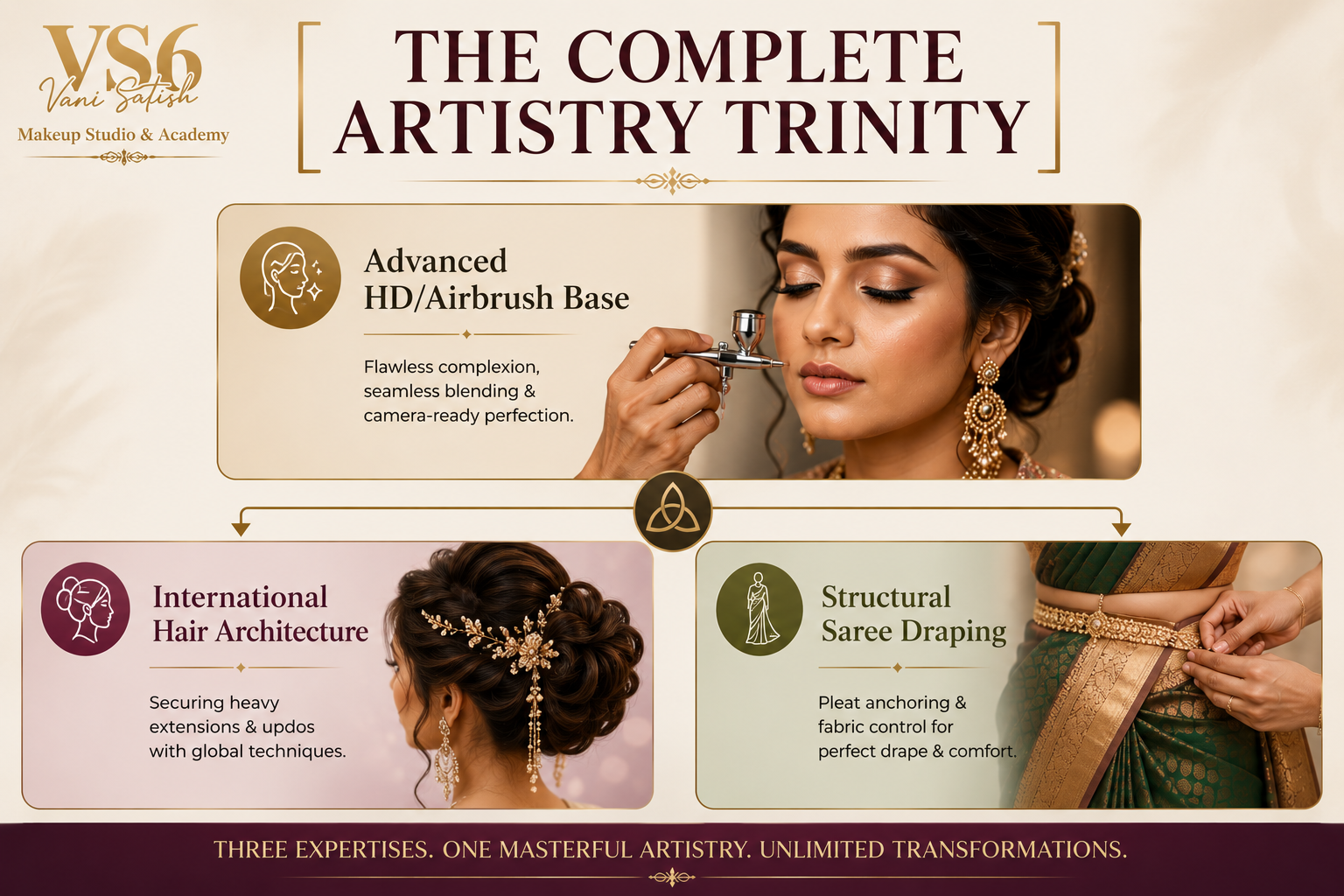
Practicing intricate bridal hair architecture (such as traditional South Indian Jade hair extensions or structural updos) and structural saree draping (pleat anchoring, fabric weight distribution) on real people builds the physical dexterity and speed needed on a hectic wedding morning.
4. Building Speed and High-Stress Client Care
A wedding morning or behind-the-scenes film set is a high-stress, fast-paced environment. Events rarely run strictly on schedule, and clients are often experiencing heightened emotional anxiety.
Executing Under Pressure: Practical training simulates real-world conditions where an artist must complete an entire bridal HD makeup, hair, and draping look within a tight 90-to-120-minute window.
Client Care & Communication: Working with live models helps students develop emotional intelligence, active listening, and a calm demeanor that puts anxious clients at ease.
5. Standard Training Center vs. Practical Mentorship Model
When researching beauty academies, use this benchmark matrix to evaluate their practical training commitment:
| Training Benchmark | Theory-Heavy School | Practical Mentorship Academy |
| Primary Practice Medium | Plastic heads / self-application | 100% live models across diverse skin types |
| Batch Size | 20 to 40+ students per trainer | Boutique batches (under 10 students) for 1-on-1 feedback |
| Skill Breadth | Isolated makeup lectures | Integrated Makeup + Hair Architecture + Saree Draping |
| Portfolio Output | Casual phone snaps under ambient lights | Live studio photoshoots with professional lighting & 4K camera optics |
| Certification Value | Unaccredited attendance certificate | Internationally accredited credentials (e.g., CCS / Exemplar Global) |
Strategic Learning & Career Resources
Build a solid foundation for your beauty business by exploring these essential guides and accredited program pages:
Choosing the Right Institute: Learn how to evaluate academies and avoid plastic mannequin traps in our detailed guide on How to Choose the Right Makeup Academy in Bangalore.
Syllabus Overview: Explore full course modules, live model practical schedules, and hands-on training timelines inside our Basic to Advance Professional Makeup Course portal.
National Benchmark Guide: Read our strategy report on evaluating beauty schools across the country in Best Makeup Academy in India (2026 Strategy Guide).
Bridal Artistry Secrets: Learn climate-resilient application and skin prep techniques in our Complete Guide to Bridal Makeup in Bangalore.
Our Academy Values: Discover our training philosophy, boutique batch model, and mentorship background on the official About VS6 Academy page.
Career Pathways: Compare earning potential across 7 lucrative career paths in our report on Top Career Opportunities After a Makeup Course.
International Standards & Quality: Verify global accreditation criteria through standards bodies like Exemplar Global.
Book a Studio Visit: Speak directly with our admissions counselors or schedule a live campus tour via our Contact VS6 Academy page.
Bridge Theory and Practical Mastery at VS6 Academy
At VS6 Makeup Studio & Academy in Frazer Town, Bengaluru, master educator Vani Satish structures every course around a 100% practical, hands-on learning methodology. By capping batch sizes to boutique numbers, every student receives step-by-step guidance, personalized correction, and live model practice.
Ready to gain real hands-on experience on live models? Contact VS6 Academy today to book a campus tour or reserve your seat for the upcoming batch.
